John Pairman (1788-1843)
The Museum’s upcoming exhibition, ‘Treasures from the Attic,’ will feature artwork by Robert Gemmell Hutchison (1855-1936), William Crozier (1893-1930) and John Pairman (1788-1843), all of whom have a connection to Biggar. The exhibition will run from Saturday 23rd May 2026 – Sunday 26th July 2026.
John Pairman was a commercial portrait painter based in Edinburgh at a time before the advent of photography. His clients came from the professional classes and featured doctors, ministers, solicitors, school masters and other local dignitaries.
Pairman was born in 1788 and grew up just outside Biggar where his parents farmed at Stane. He showed an early talent as an artist (see above), but this did not stop him being apprenticed to a draper’s firm in Glasgow once his school days were over. After he had learned his trade, he returned to Biggar and opened up a draper’s shop in the High Street.
A little later he was encouraged by his brother and a local minister to change his fortune as a painter and, heeding their advice, he subsequently left Biggar in 1817 to pursue his new career. Portrait painting in Scotland had been the domain of foreign artists during the 16th and 17th centuries. It was not until George Jamesone, from Aberdeen, established himself as Scotland’s most eminent portrait painter that portraiture became fashionable among Scottish artists.
Allan Ramsay was a leading exponent of portrait painting, as was James Howe of nearby Skirling. Both achieved considerable fame during their lifetime. Howe also achieved success as a painter of animals and fairs.
This was not to be for John Pairman; yet his art can be found in homes and collections in various parts of the world.
The Scottish National Portrait Gallery and the National Gallery in Edinburgh housework by this very humble man whose *’highly aesthetic and literary faculties were surpassed only by his humanitarian and Christian characteristics’.
Pairman never married. A long-standing engagement to Helen Alston of Dunsyre was ended when she released him from his obligation. It is said that he jumped ‘almost as high as the ceiling’ on hearing this news.
Pairman didn’t achieve the fame of his contemporary James Howe or of other artists such as Raeburn or Wilkie, yet he succeeded in having a career that lasted over twenty-five years.
John Pairman died in Edinburgh in December 1843. His body was brought back to his hometown of Biggar where he is buried close to the main door of Biggar Kirk. Ironically, the year of Pairman’s death coincided with the opening of the first commercial photographic studio in Edinburgh. Portraiture in Scotland was never again to be the same.
*Quote from the writings of Thomas Wyld Pairman
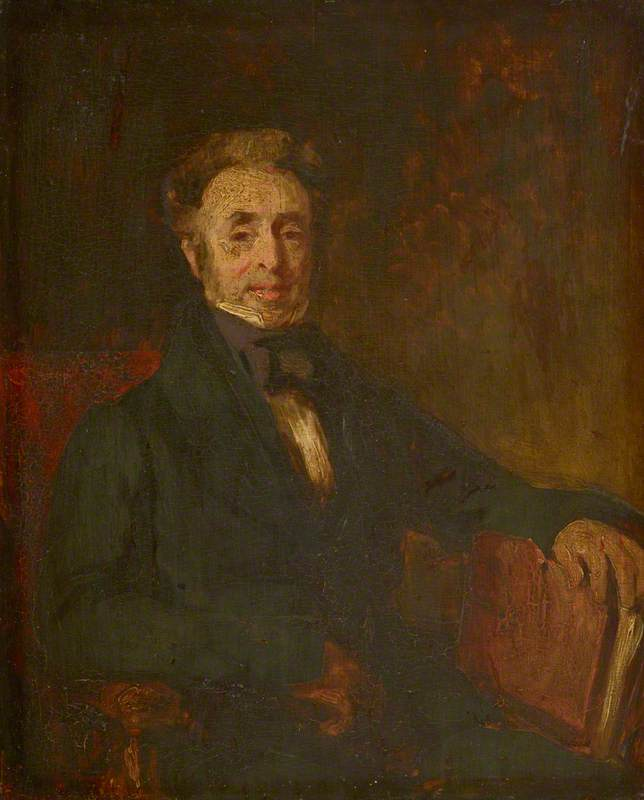
John Pairman, 1788 – 1843. Artist (Self-portrait) National Galleries of Scotland Collection. Photo, National Galleries of Scotland.