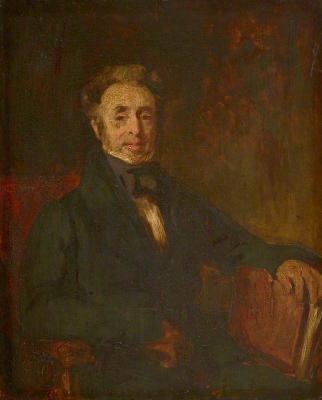
Biggar’s Jubilee Fountain
Biggar & Upper Clydesdale Museum’s current exhibition, ‘Treasures from the Attic,’ showcases a nearly 140-year-old cast-iron cherub that once sat upon Biggar’s Jubilee Fountain. The four cherubs which sit astride dolphins, all of which the Museum holds in its collection, were modelled on a young Jean Lindsay, daughter of the Biggar station master. Her uncle, James Lindsay, a draughtsman with McDowell Ironfounders, designed and built the fountain.
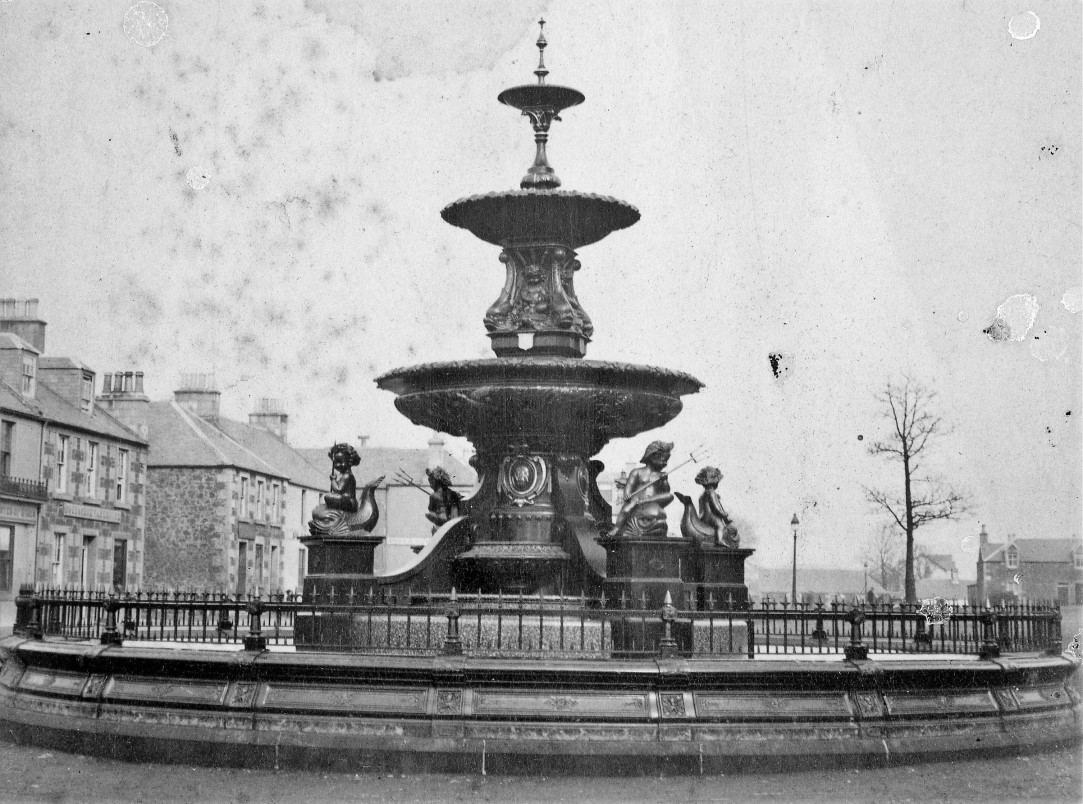
In 1887 towns across the country began to plan how they would commemorate Queen Victoria’s Golden Jubilee, and Biggar was no different. During an early meeting it was decided the town would follow Dr Kello’s idea of building a fountain at the Cross Knowe, as well as lining the Main Street with trees. However, the day of the Jubilee came and went, with no fountain, and so the town opted to hold off its celebrations until its completion. It was not until the October that year that the fountain started to be delivered, to the amazement of onlooking youths who gathered to see the event.
To fund this extravagant idea, a subscription committee was to be set up. Interestingly, in late 1888, with the fountain still unfinished, a bazaar was held at the Corn Exchange to help raise the funds necessary to complete the fountain as well as the planting of the trees.
The fountain was not without controversy. One gentleman wrote to the Hamilton Advertiser in June of 1887 to express his discontent with the building of a fountain, as he felt as though Biggar lacked other facilities such as a sports common, that would serve the public better. The gentleman refused to pay any subscription and urged others to do the same.
Twenty years prior to its eventual removal, there was an attempt to change the location of the fountain. At the end of the First World War, ratepayers gathered at the Municipal Hall to discuss moving the Jubilee Fountain to the west-end of the town so that a new war memorial could go in its place in front of the Corn Exchange. The moving of the fountain would have cost £382 alone, upwards of £15,000 in today’s money, and so after much discussion, the plan was dismissed and the fountain lived on.
The fountain lasted in the town for sixty years before it was removed. A long-standing myth suggested the fountain was removed and used for scrap iron during Second World War metal to aid the war effort. However, it was actually removed after the end of the war in 1947. There seems to be a variety of reasons for this removal; maintenance, appearance, and inconvenience seeming to be the most prevalent. There had been calls as early as 1900 to remove it as it was often considered to be an eyesore within the town. On windy days, the water would soak neighbouring shops and houses, resulting in the fountain being turned off for much of the year. Which is perhaps why, before its dismantling, the fountain was turned into some form of garden area with plants filing the basins, however, that proved to be too much maintenance.
Since then, there have been many calls to reinstate the fountain, or at least some version of it. In 1998 Biggar’s Millenium Committee put out a survey to households and Biggar High School pupils to gauge how the community would like to commemorate the turn of the century, with the reinstatement of the fountain coming out as a firm favourite. Of course, the fountain came out second amongst school children who instead wished for a rollerblade court. However, the funds did not exist within the council to maintain any kind of fountain in the town, and it was considered to be too big of a liability for any other group to take on.
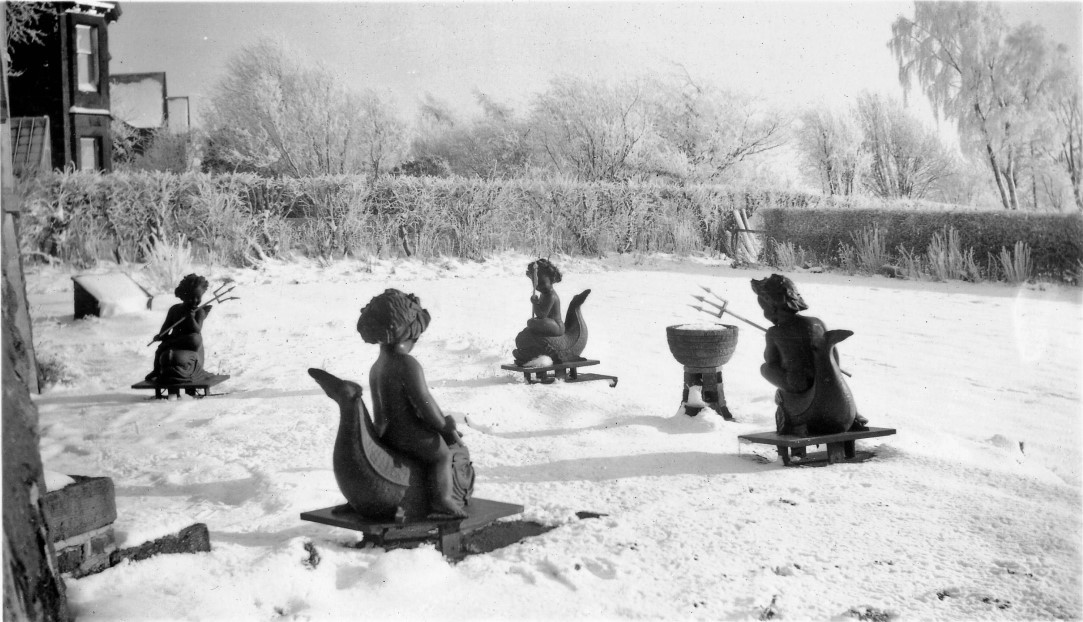
When the Biggar Town Council eventually took the decision to dismantle the fountain, it was very fortunate that Nessie Cuthbertson urged her husband, James A. Cuthbertson of Cubby’s, to rescue the four cherubs from being scrapped. After spending time sat in Nessie’s garden, the cherubs came into the hands of Brian Lambie of Biggar Museum Trust. Now, back to present day, what remains of the controversial fountain is the four lone cherubs. It was quite fitting that Cubby’s helped move one back to public viewing nearly eighty years after the Cuthbertsons’ rescued mission.
The free exhibition, ‘Treasures from the Attic’ runs until 26th July 2026.
Sources:
Primary:
Airdrie & Coatbridge Advertiser. “Biggar.” September 15, 1888. Accessed via The British Newspaper Archive.
Carluke and Lanark Gazette. “Biggar 2000.” May 19, 1999. Accessed via The British Newspaper Archive.
Carluke and Lanark Gazette. “Millennium Committee.” December 17, 1998. Accessed via The British Newspaper Archive.
Hamilton Advertiser. “Biggar.” April 9, 1887. Accessed via The British Newspaper Archives.
Hamilton Advertiser. “Biggar.” October 15, 1887. Accessed via The British Newspaper Archive.
Hamilton Advertiser. “Biggar and the Queen’s Jubilee – A Suggestion.” June 18, 1887. Accessed via The British Newspaper Archive.
Lanark & Carluke Advertiser. “Splashing Good Idea for the Millenium.” December 16, 1998. Accessed via The British Newspaper Archive.
Secondary:
Biggar Archaeology. “History and Archaeology – Myth or Fact.” January 19, 2019. https://biggararchaeology.org.uk/history-and-archaeology-myth-or-fact/
Ness, Jim. Historical Guide to Biggar High Street. Peebles: Elmbank Print, 2022
Date: 20th Jun 2026 Back to Blog